
Denis Egan
Advanced Mediator
MEET DENIS
Book A Session
WHAT IS MEDIATION

Denis Egan
Advanced Mediator
Denis is an Advanced Mediator accredited by the Mediators Institute of Ireland. He has vast experience in dealing with issues arising in a range of areas including separating couples, divorce, family mediation, organisational & workplace and sporting disputes. He is accredited to carry out child inclusive mediation which can be undertaken as part of separating couples’ mediation.
Denis was Chief Executive of the Irish Turf Club from 2001 to 2017 and became Chief Executive of the Irish Horseracing Regulatory Board (IHRB) in 2018 when the regulatory and licensing functions of the Irish Turf Club were transferred to the IHRB. Prior to being Chief Executive, Denis was the Financial Controller for the Irish Turf Club and Curragh Racecourse from 1995 to 2001. A Chartered Accountant by profession, Denis has represented the Irish Turf Club/IHRB on many committees both at home and abroad.
Denis is a member of the Mediators Institute of Ireland and is also a member of the Institute of Chartered Accountants. He also has a Diploma in Sports Law and a B.Comm degree.
Contact Denis Today
Denis is an Advanced Mediator accredited by the Mediators Institute of Ireland. He has vast experience in dealing with issues arising in a range of areas including separating couples, divorce, family mediation, organisational & workplace and sporting disputes.
You can contact Denis by phone, email or by completing the form on this page. I look forward to speaking with you soon.
Contact Denis by Phone
You can call us on 0906 455 302
Contact Denis by Email
You can email Denis on contact@athlonecareclinic.ie
Contact Denis
My Mediation Journey
Denis took early retirement from the IHRB in 2021 and qualified as a mediator in 2022.
During my career, I was involved in many disputes, some of which ended up in the courts or at tribunals that were costly both in terms of legal fees and lost management time in dealing with the matters not to mention the impact they had on the organisation. When I retired, I wanted to do something to put my practical experience to good use and to help others avoid conflict and cost, so I trained as a mediator. I also wanted to be able to use my financial and legal knowledge in whatever work I decided to do and mediation provides an excellent opportunity to do.
I became an Advanced Mediator in 2025. Advanced Members of the Mediators Institute of Ireland (MII) are experienced mediators who have successfully completed an MII advanced assessment. I have also completed a number of post-qualification courses, and I am accredited to carry out Child Inclusive Mediation.
I believe in the real benefits that mediation brings as a quick, low cost and practical solution to resolving disputes.

Denis’s Specialist Areas
Separating & Divorcing Couples
Organisation & Workplace Mediation
Family Mediation
Sports Mediation
Child Inclusive Mediation
Commercial Mediation
What is Mediation
Mediation is a voluntary and confidential process where the mediator works with the parties to help them resolve the issues between them. Any agreement reached is the parties’ agreement and nothing will be imposed on them. As a mediator, I am neutral and impartial and will always treat each party fairly. The success of the mediation depends on the willingness of both parties to cooperate, compromise and engage sincerely. I can help manage emotions and focus on the future, but I can’t make past grievances disappear.
There are many benefits to mediation. It is less stressful and less adversarial than having matters dealt with through the courts. It is much quicker and cheaper, and it is private. The parties control the timeline and come up with the solutions rather than someone deciding what the outcome will be. The parties are in effect deciding on what their future will be.
Mediation is a less combative environment than having matters dealt with through the courts and can help rebuild trust which is very important for separating couples particularly where there are children involved and also in workplace situations where the parties may have to continue to work with each other.


Why Mediate Early
Most disputes don’t fail because mediation doesn’t work. They fail because mediation is suggested too late. Early mediation is still widely perceived as a sign of weakness. And that perception isn’t strategic, it’s psychological.
When conflict first arises, something very predictable happens:
Positions harden
Egos step in
Being right starts to matter more than being effective
In that moment, suggesting mediation can feel like conceding ground, signalling doubt, or losing face. What’s really under threat isn’t the argument, it’s identity. And when identity feels challenged, people don’t collaborate. They escalate. Ironically, that early stage before positions entrench is exactly when mediation works best. Mediation has a high percentage of settlement rates provided the parties want it to work. Yet it’s still treated as a last resort, something to try only after costs have spiralled, relationships have taken a hit, and you are at the court door.
Early mediation isn’t a weakness. It’s control. It means retaining decision-making power rather than handing it to a judge or a third party, managing risk before it compounds, resolving while leverage still exists, protecting time, reputation, and working relationships.
How I Work With Clients
I see mediation as a partnership between the mediator and the parties. They are entrusting me to help them and as I always say to the parties, I will do everything I can to help the parties as this is their lives and their futures.
Usually, I meet the parties on their own at the start where there will have an opportunity to tell their story in private to me. Anything that is said to me in the first session is private between me and the party and will not be repeated in a joint session when the other party is present. Mediation is non-judgemental and there is no apportionment of blame or guilt. This session is important as it gives me an opportunity to understand the key issues that need to be dealt with in the mediation.
Generally, the sessions after that are joint sessions though on occasions, I may split the parties during a session if I think it might be beneficial.
Mediation can go as fast or slow as the parties want and I try and make mediation as easy as I can. Let’s be honest it is hard, particularly in separating couples’ cases, for the parties to come into a mediator and outline what has happened and how their lives have been impacted by a marriage breakdown.

Mediation: A Legal Requirement
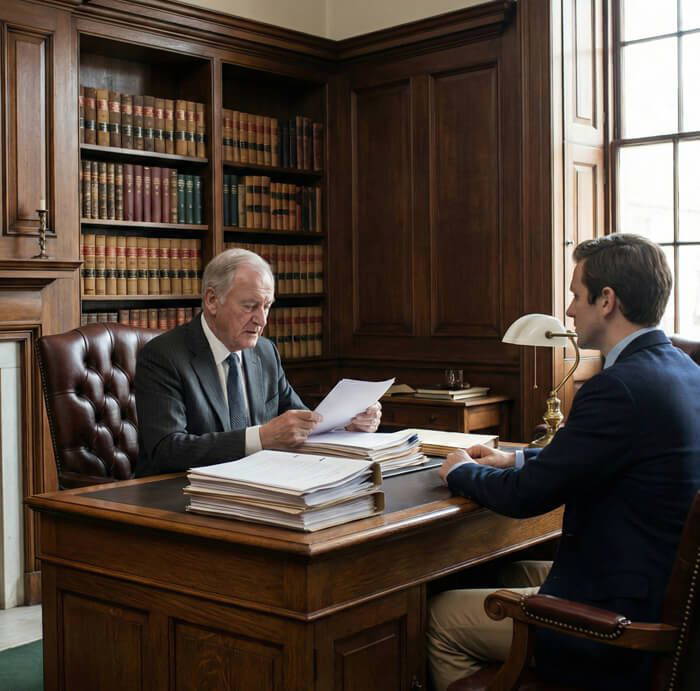
Most people are not aware but under the Mediation Act, 2017, there is now an obligation on all solicitors to tell clients about mediation prior to issuing proceedings. They must:
Advise the client to consider mediation as a means of attempting to resolve the dispute the subject of the proposed proceedings.
Provide the client with information in respect of mediation services, including the names and addresses of persons who provide mediation services.
Provide the client with information about (a) the advantages of resolving the dispute otherwise than by way of the proposed proceedings, and (b) the benefits of mediation.
Advise the client that mediation is voluntary and may not be an appropriate means of resolving the dispute where the safety of the client and/or their children is at risk.